Friday, December 02, 2022

Red-flanked Bluetail, Deeping Lakes LNR

Yesterday evening news came through of a Red-flanked Bluetail at a local nature reserve just down the road two days earlier. Surely it couldn't still be present. But, along with a few others I was there in the morning searching and, incredibly, there it was. A species that would once have had people travelling the length of the country to see, right here in the Peterborough area. Extremely confiding and calling occasionally, this was a thoroughly enjoyable experience.

Also known by the perhaps better name Orange-flanked Bush-robin, this is now a regular autumn migrant to the UK, usually in very small numbers, mainly from the increasing east Scandinavian population. But perhaps this later arrival is from further east as the range extends all the way to the Pacific coast. Inland records are very rare and this is unusually late in the year. I wonder if it will try to over-winter here.


Red-flanked Bluetail Tarsiger cyanurus


Monday, April 04, 2022

March in Valencia

After two months in the Canaries it was time to increase the species diversity a bit and hit the mainland. We were to be staying at Santa Pola, with salt pans and wetlands close by. But the accommodation we'd booked was utterly dreadful so after two nights we moved to a lovely flat high in a tower block overlooking the sea in Torrevieja. A great choice as it turned out. The La Mata Nature Reserve just inland provided a great local patch within walking distance. We also hired a car for a few days while our old neighbours and fellow birders Phil and Carol visited, enabling us to explore a little further afield.

View from the 18th floor

The whole period was characterised by some very unsettled weather with relentless storms for a week or so causing the tower block to sway alarmingly at times. I still managed to get out often, without getting soaked, and even had some decent seawatching from the relative protection of the 18th floor!

A dense calima persisted at times

Over the next four weeks I recorded 133 species (adding 12 species to my post-October 2017 list, and taking it to 682 since moving out of our house). Compare that with the 53 species I saw in Tenerife (and slightly different 53 in Fuerteventura) over the previous couple of months and the restricted diversity of the islands is very clear. The onset on Spring migration obviously helped a great deal, as the last week or so saw plenty of early migrants moving in and through.

Santa Pola

Our only day in Santa Pola produced 2 Sanderling, 6 Audouin's Gulls, 25 Sandwich Terns, 5 Barn Swallows, 2 House Martins and 2 Black Redstart. Leaving the following day we called in at the saltpans and added 2 Slender-billed and 1 Mediterranean Gull, Greater Flamingos, 3 Spoonbills and a Marsh Harrier. Not bad, but we were very happy to be moving on to somewhere better for the month.

Laguna de la Mata

I quickly established this nearby reserve as my local patch and over the month recorded 83 species here, either around the shores of the lagoon or the surrounding woodland and scrub. Common Shelduck were, er, common, along with Red-legged Partridge, Woodpigeon, Collared Dove, Yellow-legged Gull, Greater Flamingo (peaking at 160 on 27/3), Black-necked Grebe (110), Great Cormorant (30), Grey Heron (14), Hoopoe (4), Iberian Green Woodpecker, Monk Parakeet (8), Crested Lark (18), Sardinian Warbler (8), Spotless Starling (100), Blackbird (7), Black Redstart (11), House Sparrow (6), White Wagtail (12), Meadow Pipit (15), Greenfinch (40), Linnet (60), Goldfinch (8), Serin (40) and Corn Bunting (15) - peak counts in brackets.


    Greater Flamingo Phoenicopterus roseus

Iberian Green Woodpecker Picus sharpei

Crested Lark Galerida cristata

European Serin Serinus serinus

I was able to read rings on three of the Flamingos and these were ringed in Andalucia (yellow rings) and Italy (blue ring).

Greater Flamingos - ringed in Andalucia

Greater Flamingo - ringed in Italy


Waders were well represented (max counts in brackets): Stone Curlews were present throughout with up to 4 seen, up to 9 Black-winged Stilts from 22/3 on, Avocet (50), Grey Plover (16), Common Ringed Plover (40), Little Ringed Plover (2 on 15/3 and 24/3), Kentish Plover (12), 1 Whimbrel on 15/3, 1 Wood Sandpiper on 15/3, 1 Common Redshank on 1/4, Turnstone (3 on 4/3, 3 on 15/3 and 1 on 25/3), Knot (1 on 9/3 and 15/3), 2 Ruff on 15/3, Sanderling (4 dates, with 20 on 31/3), Dunlin (150) and Little Stint (30).

Grey Plover Pluvialis squatarola and Wood Sandpiper Tringa glareola

Kentish Plover Anarhynchus alexandrinus

35 Slender-billed Gulls arrived on 24/3 with 3 Black-headed Gulls, smaller numbers lingering. 2 Audouin's Gulls on 22/3 and 1 on 28/3. 2 Mediterranean Gulls also arrived on 24/3, with 30 on 29/3. A Gull-billed Tern on 27/3. Single Little Egrets on 15/3 and 22/3, with 4 on 29/3. Cattle Egret peaked at 20 on 1/4.

Raptors were in short supply: an Osprey on 22/3, a Booted Eagle on 9/3, 1 or 2 Marsh Harriers on several dates, and a Honey Buzzard on 2/4. Only Common Kestrel was regular, with up to 3 present throughout.

European Honey Buzzard Pernis apivorus

Common Kestrel Falco tinnunculus

Iberian Grey Shrike, Common Magpie, Jackdaw, Great Tit, Thekla's Lark, Crag Martin, Long-tailed Tit, Mistle Thrush, Song Thrush, European Robin, European Stonechat and Chaffinch were all seen less often.


Thekla's Lark Galerida theklae

Corn Bunting Emberiza Calandra

Migrants started moving through by the end of the month, although Barn Swallows had been present earlier. They peaked at just 10 on 22/3. House Martins appeared on 27/3, with 24 through on 31/3. 1 or 2 Woodchat Shrike were present from 28/3 and there were 8 Greater Short-toed Lark on 25/3 and 25 on 28/3. Chiffchaff were surprisingly absent until 27/3, with only singles until 10 on 31/3. Blackcap were likewise scarce with singles on 27/3 and 30/3. 1 or 2 Western Subalpine Warblers were present from 27/3, with a single Common Whitethroat on 27/3. The first Common Redstart appeared on 15/3, with numbers peaking at 5 on 29/3.

Woodchat Shrike Lanius senator


Greater Short-toed Lark Calandrella brachydactyla

Western Subalpine Warbler Curruca iberiae


Common Redstart Phoenicurus phoenicurus

I found the first Western Black-eared Wheatear in the scrubby dunes close to the shore on 25/3 but there were singles at the reserve on 1/4 and 2/4. Northern Wheatear was scarce with 1 on 25/3 and 2 on 2/4.
Western Black-eared Wheatear Oenanthe hispanica

The first Pallid Swifts moved through the reserve on 22/3, although I'd seen small numbers elsewhere since 7/3. Single Alpine Swifts seen on 27/3 and 28/3 and 16 Common Swifts identified during a peak movement of 74 Pallid Swifts on 2/4. 1/4 also saw singles of Great Spotted Cuckoo and Common Cuckoo.

Cabo Cervera

Our apartment on the 18th floor had excellent views of the cape and over the sea, and, with the storms, a fair few passing birds. Waders could be seen on the shoreline some days with Turnstone (12) and Sanderling (58) most frequent and singles of Grey Plover, Common Ringed Plover, Whimbrel and Dunlin and 2 Kentish Plover. Just a single Black-headed Gull among the more common Audouin's, Mediterranean and Yellow-legged Gulls. Sandwich Terns were present throughout peaking at 6 on 9/3, although 40 unidentified terns passed through on 27/3. Presumed Balearic Shearwaters logged on 6/3 (25), 9/3 (2), 27/3 (8) and 1/4 (4). Gannets were more regular with peaks of 11 on 5/3 and 12 on 17/3.

Swift passage could be impressive with 150 Pallid Swift logged on 23/3 and a single Alpine Swift on 26/3. No Barn Swallows noted but a Red-rumped Swallow on 17/3, a Crag Martin on 12/3 and 1 House Martin on 9/3 and 2 on 12/3. Migrant warblers were found from 1/4, with singles of Blackcap, Sardinian and Western Subalpine Warbler. Hoopoe, Black Redstart and Serin also appeared on one or two dates. 36 species seen around the apartment.

Parque Natural de El Hondo (Valencian: Parc Natural del Fondo)

Having a hire car for a few days while our friends visited meant a couple of visits to this iconic, RAMSAR listed SPA, on 8th and 13th March. As expected this yielded a good variety of bird life with 63 species seen. As well as more common wildfowl there were up to 8 Marbled Duck, 11 Red-crested Pochard,  3 Red-knobbed Coot and 2 Western Swamphen. 2 Alpine Swift and 3 Pallid Swift went over the visitor centre on 13/3 and a White Stork on 8/3. A Stone-curlew was close to the car park on 13/3 and other waders were Black-winged Stilt, 10 Avocet, 1 Black-tailed Godwit, 15 Common Snipe and 1 Green Sandpiper. Also 30 Glossy Ibis, 2 Spoonbill, 2 Great White Egret and 3 Grey Heron.

Marbled Duck Marmaronetta angustirostris

Bluethroat Luscinia svecica

Red-knobbed Coot Fulica cristata

Watching from the south side on 8/3 netted 4 Whiskered Terns, 50 Greater Flamingo, 6 Little and 30 Black-necked Grebe. A Greater Spotted Eagle seen well from here on 8/3, with another probable from the Visitor centre on 13/3. Other raptors across the site: 2 Booted Eagle, 6 Marsh Harrier, 1 Common Buzzard, 2 Common Kestrel and a surprise Lesser Kestrel seen on prey on 13/3.

Just 1 Hoopoe, 2 Iberian Grey Shrike, 6 Crested Lark, 2 Zitting Cisticola, 1 Moustached Warbler (north of visitor centre), 3 Crag Martin, Barn Swallow, House Martin, 1 Red-rumped Swallow, 7 Common Chiffchaff, 2 Cetti's Warbler, 5 Blackcap, 4+ Sardinian Warbler, 1 Blackbird, 1 Black Redstart, 2 European Stonechat, 12 Tree Sparrow, House Sparrow, 2 White Wagtail, 2 Greenfinch, 2 Serin, 2 Reed Bunting.

Murallas de King Kong, Murcia

On 10th March we drove to the mountain range immediately south of Murcia city looking for different birds. On the way, just to the south we encountered a Lesser Kestrel and an Iberian Grey Shrike by the RM-F13 near El Caracolero. A flock of c.75 Red-billed Chough over here was interesting. Further along this road as it went through a tight gorge at Cabezo del Buitre (Vulture Peak) located 2 Blue Rock Thrush and 1 Black Wheatear on rocks above the road. Also 2 Crested Tit, 6 Crag Martin and 2 Serin here.

Peregrine Falco peregrinus

A 3 hour gentle hike below the northern side of the ridge produced 1 Golden Eagle, 2 Peregrine Falcon (a pair displaying), 1 Iberian Green Woodpecker, 3 Red-billed Chough, 1 Coal, 4 Crested, 3 Great and 9 Long-tailed Tit, 1 Crag Martin, 20 House Martin, 2 Sardinian Warbler, 3 Firecrest, 1 Blackbird, 1 Robin and 1 Chaffinch, 2 Red-legged Partridge and 6 Woodpigeon.

Salinas de San Pedro del Pinatar

Took one trip to these salt pans and dunes to the south on 11th March. Much as expected, but a good selection of waders: 2 Common Shelduck, a Red-legged Partridge, 10 Black-winged Stilts, 120 Avocet, 37 Black-tailed Godwit, 2 Common Sandpiper, 1 Common Redshank, 6 Ruff, 3 Sanderling, 7 Audouin's and 1 Mediterranean Gull among the majority Black-headed and Yellow-legged, plenty of Greater Flamingo, 2 Black-necked Grebe, 2 Little & 1 Cattle Egret, 6 Grey Heron, 4 Monk Parakeet, 10 Crested Lark, 4 Sand Martin, 5 Barn Swallow, 1 Common Chiffchaff, 4 Sardinian Warbler, 30 Spotless Starling, 1 Blackbird, 3 Stonechat, 1 White Wagtail, 2 Meadow & 1 Water Pipit, 1 Greenfinch, 1 Serin.

El Clot de Galvany

On 12th March we took our friends back to the airport. As it was an afternoon flight we had time to call in at this excellent wetland reserve that was my patch when we stayed in Gran Alacant at the end of 2017 (https://thenaturalstone.blogspot.com/2017/12/7-weeks-in-costa-blanca.html). Shoveler, Mallard, Red-crested & Common Pochard, Moorhen and Eurasian Coot were all numerous and among them 4 Garganey, 2 Teal, 4 Marbled Duck and 20 White-headed Duck. Otherwise singles of Cattle Egret, Booted Eagle, Sparrowhawk, Marsh Harrier and Kestrel, 2 Iberian Grey Shrike, 250 Crag and 120 House Martin, 2 Chiffchaff, 1 Blackcap, 3 Sardinian Warbler, 1 Blackbird, 1 Stonechat, Spotless Starlings, 2 Greenfinch and 1 Serin.

White-headed Duck Oxyura leucocephala

Other locations

On 18th and 19th March we were in Denia for the Fallas celebrations, which were dramatic and impressive. There were 3 Alpine Swift around both days, 22 Sandwich Terns, a Hoopoe, up to 5 Monk Parakeets, 1 Barn Swallow, 6 House Martin, 1 Chiffchaff, 1 Common Whitethroat, 7 Black Redstart, 1 Stonechat, Greenfinch, Goldfinch and Serin.

We had one last short day out with friends to the town of Rojales on 3/4, before flying back the following day, and saw 40 Audouin's Gulls along the river in the town, 2 Night Heron, 2 Swallows and 1 House Martin.

Other Wildlife

Black-eyed Blue Glaucopsyche melanops

Green Hairstreak Callophrys rubi

Swallowtail Papilio machaon

Wall Lasiommata megera

Itame vincularia

Spanish Psammodromus Psammodromus hispanicus


Viperine Snake Natrix maura

Iberian Green Frog Pelophylax perezi


Red Squirrel Sciurus vulgaris


Acrida ungarica

Full bird list here

Saturday, March 05, 2022

Tenerife

Landing at Tenerife North airport was a massive shock visually after the profoundly arid landscape of Fuerteventura. So green!! It took about a week to get over the novelty.

Our base for the month was at Bajamar on the north coast of the Anaga peninsula in the northeast of the island. A good base for exploring the wetter, forested mountains but we had a car so were able to travel further afield.

Bajamar


The immediate surroundings of our apartment were mainly small scale agriculture and held some good wildlife. One of the first birds encountered was Canary Islands Chiffchaff, the unfamiliar song heard from the balcony immediately drawing my attention. Very common on the island in most areas.


Canary Islands Chiffchaff Phylloscopus canariensis

Atlantic Canary was also very common throughout and 1 Greenfinch here was my only sighting.

Atlantic Canary Serinus canaria

Up to 5 Common Kestrel around this area with others seen elsewhere around the island. 


Common Kestrel Falco tinnunculus canariensis

Four Barbary Partridge were in the area (one of four sightings during the month).


Barbary Partridge Alectoris barbara

This was the only place we encountered West Canary Skink.

West Canary Skink Chalcides viridanus

Balsas de Tejina

Nearby are a few reservoirs, not all accessible, the best of which is at the roundabout leaving Tejina towards Bajamar. Three Black-crowned Night-herons were there on the 5th and a single Glossy Ibis on two dates. A Garganey was present throughout. Three African Blue Tits also here on one date.

African Blue Tit Cyanistes teneriffae

A few Cattle Egrets were usually around this area and a roost of 80 estimated at one of the smaller reservoirs nearby. Eurasian Coot, Moorhen, Grey Heron and Little Egret also recorded. Up to two Barbary Falcons showed here and at Punta del Hidalgo as well as further south along the coast at El Sauzal.

Punta del Hidalgo

Seawatching was always going to be a big part of my time here and the headland at the nearby lighthouse had two seawatching hides facing north or NW. Despite many pleasant hours here the passing seabirds were almost exclusively Cory's Shearwaters. Evenings had the highest numbers peaking at 360 per hour moving north. The Cory's didn't quite have it all their own way though. On the 9th I picked up a "Little Shearwater" heading north not far out. I recorded it as Barolo Shearwater at the time but since then I've seen a photo of a bird passing nearby a few weeks later that was identifiable as Boyd's. However my bird showed a very clear white "face" isolating the dark eye and Barolo is the more likely candidate. Seems decent photos are becoming more and more necessary on seawatches to be sure of some tricky species.

I did get one other shearwater. On 27th February a Manx Shearwater flew north (the only sighting). This showed very well and had rather dark underwings consistent with the putative "canariensis" subspecies described in this paper. The local population of Manx breed earlier than northern birds and nest inland among the laurel forests. It may be severely threatened.

Otherwise I recorded 2 Gannets each on two days and the most bizarre sighting; a Barbary Partridge flying over the sea close inshore, which then landed and swam on the sea for while.

This rocky stretch of coast also had up to 3 Grey Plover, 9 Common Ringed Plover, 6 Whimbrel, 11 Turnstone and 2 Common Sandpiper. It was also one of the only places I saw Spanish Sparrow (up to 4) and Berthelot's Pipit (2).


Parque Rural de Anaga

One of the advantages of being based in the north of the island was being close to the Anaga Rural Park; one of the better areas to search for the two endemic pigeons of the island. Multiple visits may be necessary as the weather in these mountains often closed in shrouding everything in cloud and making viewing impossible.

On my first two visits I saw single Laurel Pigeons at Los Batanes (at the lower edge of the laurel forest) and Pico de Inglés. But it took a third visit, once again watching from the excellent viewpoint of Pico de Inglés, to locate a single Bolle's Pigeon. On this longer stake out 3 Laurel Pigeons showed, one of them repeatedly rather close and often obscured by the trees directly below and often calling/singing. It was occasionally possible to see one perched. Then, as I was driving back through dense woodland close to this spot, a Bolle's Pigeon flew out and directly along the road in front of the car extremely close.

Canary Islands Chaffinch Fringilla coelebs canariensis
Also on this last visit there were around 100 Plain Swifts swirling around the steep slopes. I also noted distant Swifts on the drive up and down the road from Las Mercedes on other days but otherwise only encountered them once at Playa de Las Americas.

Other species seen here were Common Buzzard, Raven, Canary Island Chiffchaff, Tenerife Goldcrest, Blackbird, European Robin and the rather splendid Canary Island race of Common Chaffinch.


Tenerife Blue Chaffinch Fringilla teydea
Las Raices

This Área recreativa is in the northern tip of the Corona forestal, an extensive region of (largely replanted) pine forest at an altitude of 1-2000m surrounding the central plain and volcano. The hiking routes around here are easy and in open pine woodland, a pleasant change from the dense laurel forests where views are hard to come by. Birdlife was fairly thin on the ground while walking in the forest but around the car parks and picnic areas there were up to 6 Tenerife Blue Chaffinch.

There was also a Canary Islands Common Chaffinch here, 2 Tenerife Goldcrests and 4 canariensis Great Spotted Woodpeckers. African Blue Tit was particularly numerous here with up to 11. A Barbary Falcon also flew over.


Tenerife Great Spotted Woodpecker Dendrocopos major canariensis

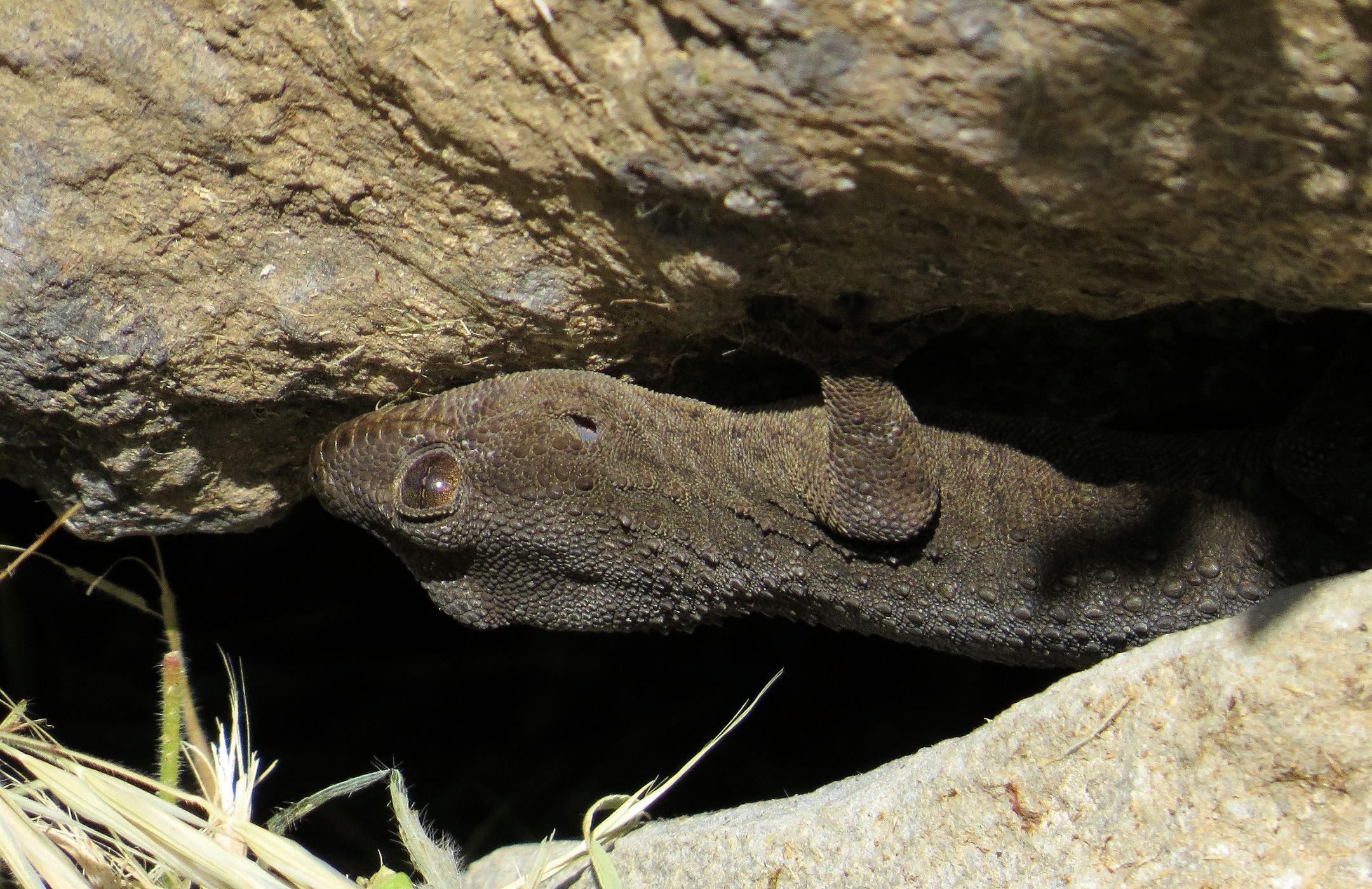
This was one of only two places we encountered Tenerife Gecko

Tenerife Gecko Tarentola delalandii

We also saw this well at the Barranco de la Cruz, La Quinta (just NE of Puerto de la Cruz), where there were many Tenerife Lizards and a good number of small birds.


El Teide rising above a sea of cloud
El Teide

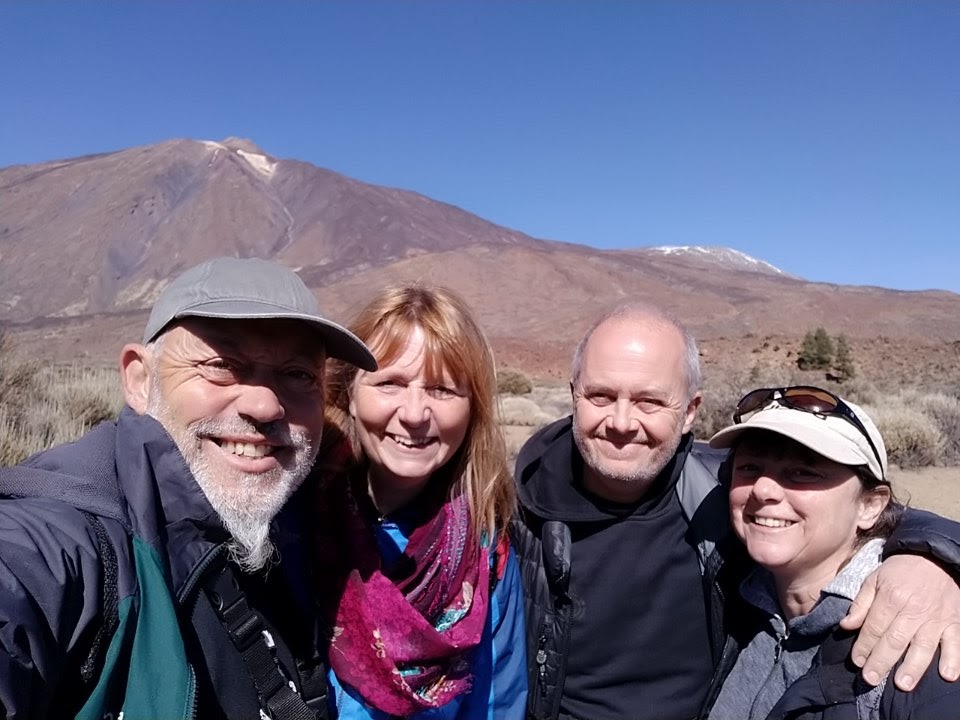
The jewel in Tenerife's crown is without doubt El Teide. On clear days we could see the mighty peak from our apartment some 43km away. Variable amounts of snow covered the 3715m peak and while my sister and brother inlaw were visiting us we decided to visit and booked the cable car to the summit.

The day of the trip was clear and sunny but rather cold and as we reached the Área Recreativa Ramón el Caminero at around dawn we found the gates closed due to icy conditions higher up. To be fair it was like glass in places here at about 1580m too. As time ticked by we were clearly not going to make our booked time for the cable car to the top of the volcano but were told we could rebook for a later time once there. Eventually, after seeing a female Tenerife Blue chaffinch here (and nothing else) we were on our way again through the very impressive scenery of the coronal forest and volcanic "cañadas" plain, all the time with the massive conical peak dominating to the south.

We got to the cable car car park and after some confusion got booked on but while waiting in the queue the whole thing was shut down due to adverse conditions at the top. It was just too cold and windy and even those that had managed to get up there were not able to leave the terminal. In the end that would have been a very expensive trip so we were quite glad to accept the refund and enjoy the rest of the time walking in the dramatic volcanic landscape. Wildlife was limited to one Common Kestrel and an unidentified small bird that may have been a Berthelot's Pipit.

Playa de las Americas

We always fancied a trip to the south of the island. While picking up and delivering Jane and David from the airport we were struck by the difference in the climate; so much warmer and drier. Then news came of a wintering Semipalmated Plover - a species I'd been researching, while keeping a close eye on all the Common Ringed Plovers I'd been seeing. So we drove the hour or so to a very busy Playa de las Americas and spent the day there.

I found the waders and eventually located a much slimmer bird (especially seen head on) with a very narrow yellowish eye ring and rather narrow breast band, uniform in width. Outer palmations were visible but seeing the inner palmations was extremely difficult and I had, inexplicably, left my camera with Karen while I negotiated the rocky shore, so this feature wasn't particularly helpful. I did note more white in the lores though but not the shape of white above the gape. Photos would have been very helpful but, along with hearing the rather Spotted Redshank like sharp high "ch-wit", convinced of the ID of Semipalmated Plover. A species I'd like to see again well enough to photograph.

I did make another trip to the same spot a couple of days later to try again for photos but the tide state meant most waders were roosting well out of range on a breakwater. On that visit though I did get superb scope views of several Long-finned Pilot Whale.

Other waders were Common Ringed Plover, Turnstone, Sanderling, Whimbrel, Grey Plover, 1 Dunlin and 1 Common Sandpiper, with many Cory's Shearwaters, a few Gannets, a few Black-headed Gulls and up to 50 Sandwich Terns offshore. In the town were a handful of Plain Swifts around palms, Ring-necked Parakeet and the only Hoopoe of the stay.

Other Wildlife

Tenerife Lizard Gallotia galloti

This was pretty common throughout the island and often easy to photograph. Quite a difference in appearance depending on age.


Grapsus adscencionis

This vibrantly coloured crab was entertaining to watch on the rocky shoreline.


Lepidoptera

Red Admiral Vanessa atalanta


Canary Red Admiral Vanessa vulcania


Canary Speckled Wood Pararge xiphioides


Plain Tiger Danaus chrysippus

Scopula guancharia

Small Copper Lycaena phlaeas

Small White Pieris rapae

Others


Annulated Sea Hare Aplysia dactylomela

Broad Green-winged Grasshopper Aiolopus strepens


Iberian Green Frog Rana iberica

Mayfly Ephemeroptera

Red-veined Dropwing Trithemis arteriosa


White-banded Digger Bee Amegilla quadrifasciata

Total of 53 species (5 lifers) seen during the month
Garganey
Barbary Partridge
Rock Dove
Bolle's Pigeon
Laurel Pigeon
Collared Dove
Laughing Dove
Plain Swift
Common Moorhen
Eurasian Coot
Grey Plover
Common Ringed Plover
Semipalmated Plover
Whimbrel
Ruddy Turnstone
Sanderling
Dunlin
Common Sandpiper
Black-headed Gull
Yellow-legged Gull
Sandwich Tern
Cory's Shearwater
Manx Shearwater
Barolo Shearwater
Northern Gannet
Grey Heron
Little Egret
Cattle Egret
Black-crowned Night-Heron
Glossy Ibis
Eurasian Sparrowhawk
Common Buzzard
Eurasian Hoopoe
Great Spotted Woodpecker
Common Kestrel
Barbary Falcon
Ring-necked Parakeet
Common Raven
African Blue Tit
Barn Swallow
Canary Islands Chiffchaff
Eurasian Blackcap
Sardinian Warbler
Goldcrest
Eurasian Blackbird
European Robin
Spanish Sparrow
Grey Wagtail
Berthelot's Pipit
Common Chaffinch
Tenerife Blue Chaffinch
European Greenfinch
Atlantic Canary